This week, in our TESOL course, we have been
studying about Cultural Paradigms. As
part of our study, we have watched three videos: a lesson by professor John
Ivers from Brigham Young University-Idaho concerning cultural paradigms, the
“Cultural Clashes in Defining Beauty” Ted Talk by Delali Bright and Cultural
Differences by National Geographic. In
the first video, professor Ivers explains that two people can see the same
event and interpret it differently because of their cultural differences. A paradigm may differ immensely from one
culture to another. In the second video,
Delali Bright told us how she was bullied and marginalized for being skinny
when she was younger. In her country in
west Africa, skinny people were seen as sick, poor and ugly. When she moved to the U.S., she was praised
because of her body. She realized that
the two cultures have different definition for beauty and that others’ opinions
were determining her happiness and unhappiness.
She says that “it’s important to realize the role that people around us
play into how we form our opinion, and how more often our values are affected
by a changing society.” In the National
Geographic video, a group of men from Sudan go to the U.S. and face many
cultural differences including some kind of prejudice. Watching
the videos, I could learn that paradigms force us to interpret reality in a
different way and culture creates false needs and false problems. I am a teacher in Brazil, a large country,
rich in cultural diversity due to miscegenation. Brazil is a melting pot of cultures from
Europe, Africa, Asia and native population.
It is stated that there are many “Brazis” inside Brazil. The teacher needs to be aware of these
cultural differences and challenges some of his/her paradigms concerning
different cultures. It is important to
see each student as part of a culture but also as an individual, respecting both
his/her collectivity and individuality. The
more the teacher raises this awareness, the more s/he is able to make the
classroom a welcoming and respectful environment for all, avoiding feelings of
exclusion and drop outs. The question
is: how can we raise this awareness in the school environment, respecting both
collectivity and individuality?
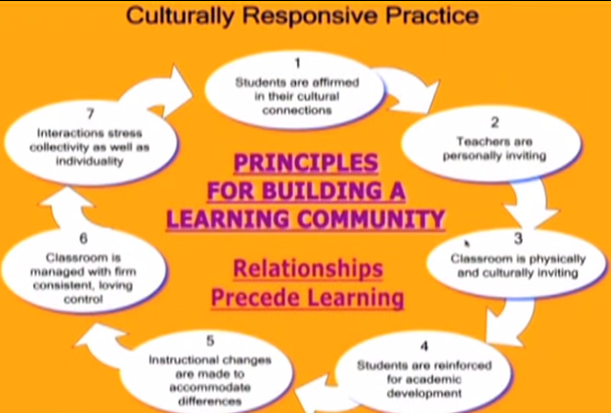
Image from teachallreachall.weebly.com


Hi Carine,
ResponderExcluirThanks for sharing your experience of living in a country which has such rich cultural diversity.
I liked that you emphasized the importance of preparing a warm environment for the students and accepting each of them as part of the class, as well as individually. We all have things in common and we also have our own identity. I consider that teachers are challenged to identify the similarities that exist between their students to build unity in the classroom, and also their personal characteristics to strengthen their self-esteem and confidence.
Thanks for your comment,Tanya.
ResponderExcluir